
Xiaomi vs. iPhone: The Ultimate Choice for Tech Enthusiasts
Design, Display & Performance Battle: Xiaomi vs. iPhone
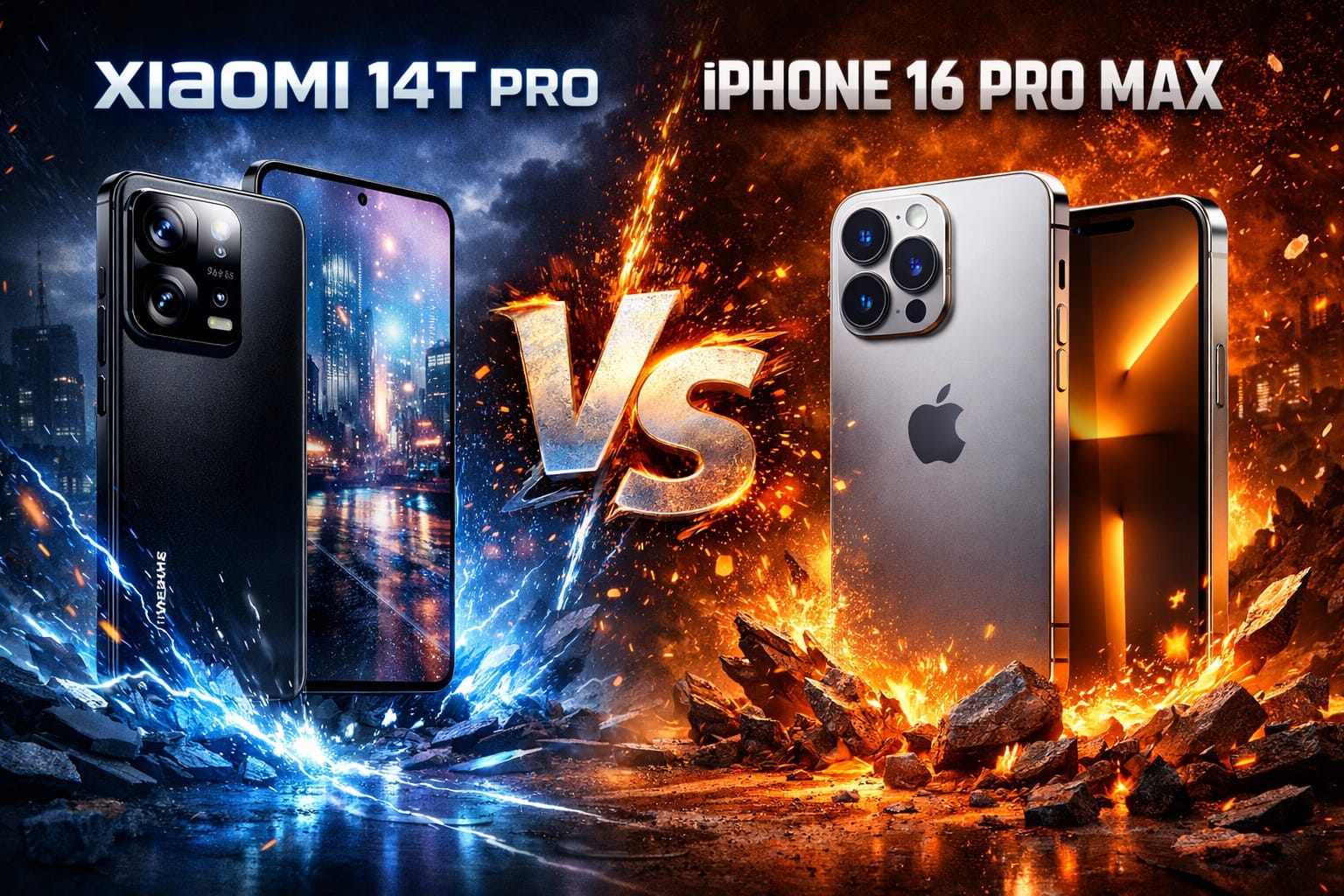
In the flagship arena of 2026, the choice between Xiaomi and Apple has never been more distinct. The Xiaomi 14T Pro is the ultimate “value-flagship” powerhouse, offering lightning-fast speeds and Leica optics, while the iPhone 16 Pro Max remains the gold standard for premium build, professional video, and seamless AI integration.
The Xiaomi 14T Pro is designed for those who want cutting-edge technology—like a 144Hz display and 120W charging—at a price that undercuts the competition. It leans heavily into its partnership with Leica for a classic photography feel. The iPhone 16 Pro Max is the peak of Apple’s engineering, featuring a larger 6.9-inch display, the new Camera Control button, and Apple Intelligence that redefines how you interact with your phone.
Specifications (2026 Comparison)
|
Feature |
Xiaomi 14T Pro |
Apple iPhone 16 Pro Max |
|
Display |
6.67″ AMOLED (144Hz, 4000 nits) |
6.9″ Super Retina XDR (120Hz, 2000 nits) |
|
Processor |
MediaTek Dimensity 9300+ (4nm) |
A18 Pro (3nm) |
|
RAM |
Up to 16GB LPDDR5X |
8GB LPDDR5X (Optimized for AI) |
|
Main Camera |
50MP Leica (Light Fusion 900) |
48MP Fusion Camera |
|
Telephoto |
50MP (2.6x Optical) |
12MP Tetraprism (5x Optical) |
|
Battery |
5,000 mAh |
4,676 mAh |
|
Charging |
120W Wired / 50W Wireless |
25W-30W Wired / 25W MagSafe |
|
Build |
Aluminum Frame / Glass Back |
Grade 5 Titanium |
|
Durability |
IP68 |
IP68 (6m depth) |
In-Depth Analysis
1. Performance: Raw Power vs. Efficiency
The Xiaomi 14T Pro uses the Dimensity 9300+, which is a monster for multi-core tasks and high-refresh-rate gaming (144Hz). However, the iPhone 16 Pro Max’s A18 Pro chip is built on a 3nm process, leading the industry in single-core speed and energy efficiency. While Xiaomi feels “faster” due to the screen refresh rate, the iPhone is more stable for professional video editing and intensive 3D gaming.
2. Cameras: Artistic Leica vs. Pro Video
- Xiaomi: The Leica Summilux lens offers “Leica Authentic” and “Leica Vibrant” modes, giving photos a high-contrast, artistic look that feels like a real camera.
- iPhone: Apple wins on Video. With 4K 120fps Dolby Vision and the new Camera Control button for tactile zooming, it remains the primary tool for content creators. Apple Intelligence also helps in removing objects or rewriting the mood of a photo seamlessly.
3. Charging: The 120W Revolution
This is no contest. The Xiaomi 14T Pro can charge from 0% to 100% in roughly 19 minutes with its 120W HyperCharge. The iPhone 16 Pro Max takes over an hour. If you are a busy traveler, Xiaomi’s charging speed is a life-changer.
Pros & Cons
Xiaomi 14T Pro
- ✅ Pros: Incredible 144Hz display; 120W charging; Stunning Leica photography; Much more affordable.
- ❌ Cons: HyperOS has more bloatware than iOS; Resale value drops quickly; Shorter software support.
Apple iPhone 16 Pro Max
- ✅ Pros: Best-in-class Video; Premium Titanium build; Longest battery life in a flagship; Massive 6.9″ screen.
- ❌ Cons: Extremely expensive; Very slow charging; Limited to 120Hz (compared to Xiaomi’s 144Hz).
Frequently Asked Questions (FAQs)
- Q: Which phone is better for gaming?
- For competitive gaming (PUBG/Genshin), the Xiaomi 14T Pro is superior due to its 144Hz display and advanced cooling system.
- Q: Does iPhone 16 Pro Max have AI?
- Yes, it is the first iPhone built from the ground up for Apple Intelligence, offering advanced Siri and writing tools.
Our Verdict
- Choose the Xiaomi 14T Pro if you want the best “Bang for your Buck.” If you value crazy-fast charging, a smoother 144Hz screen, and artistic Leica photos, Xiaomi is the winner.
- Choose the Apple iPhone 16 Pro Max if money is no object. If you want the most prestigious build, the best video camera in the world, and an ecosystem that works perfectly for years, Apple remains the king of the flagships.
Price & Availability
Top Recommended


GearTechScope is a participant in the Amazon Services LLC Associates Program, an affiliate advertising program designed to provide a means for sites to earn advertising fees by advertising and linking to Amazon.com.
Leave a Reply