
Xiaomi Redmi 15 5G vs. Samsung Galaxy A16 5G: The Ultimate Budget 5G Battle!
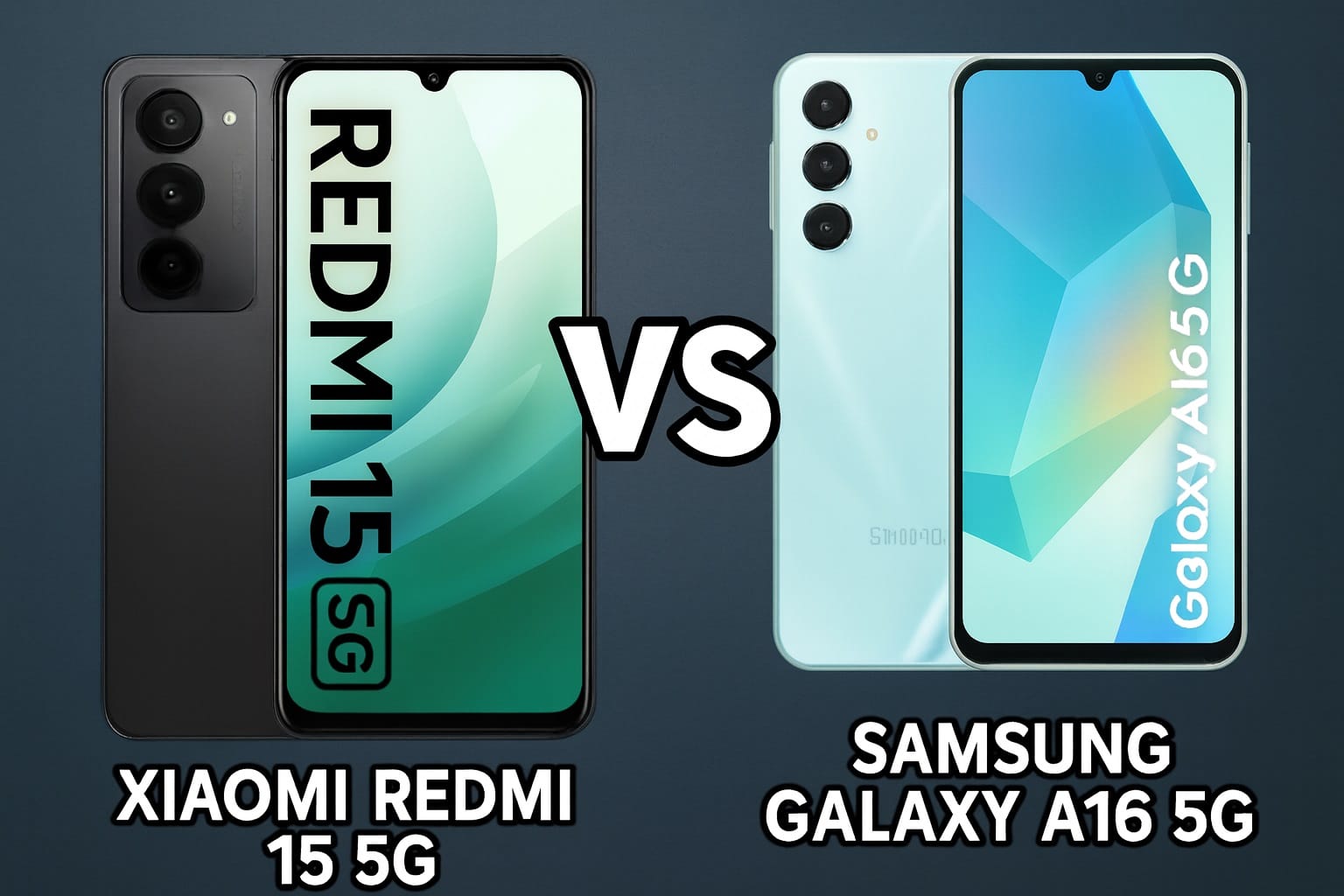
Xiaomi Redmi 15 5G vs. Samsung Galaxy A16 5G: High Speed, Low Price
In 2025, 5G is no longer a luxury—it’s a necessity. The Xiaomi Redmi 15 5G and the Samsung Galaxy A16 5G are the top contenders for the “Value King” title. Xiaomi continues its tradition of offering high-end hardware like 144Hz displays at a low cost, while Samsung counters with a massive software promise of 6 years of updates. Whether you prioritize raw performance or long-term security, this comparison will help you decide which budget 5G phone deserves your money.
Quick Specifications Comparison
|
Feature |
Xiaomi Redmi 15 5G |
Samsung Galaxy A16 5G |
|
Display |
6.67″ IPS LCD (144Hz Refresh) |
6.7″ Super AMOLED (90Hz Refresh) |
|
Processor |
MediaTek Dimensity 6400 |
Exynos 1330 / Dimensity 6300 |
|
RAM/Storage |
Up to 8GB / 256GB |
Up to 6GB / 128GB |
|
Main Camera |
50MP AI Main |
50MP Main + 5MP UW + 2MP Macro |
|
Battery |
6,000 mAh |
5,000 mAh |
|
Charging |
33W Fast Charging |
25W Fast Charging |
|
Software Support |
2 Years OS / 3 Years Security |
6 Years OS & Security Updates |
|
Durability |
IP53 Dust/Splash |
IP54 Dust/Splash |
In-Depth Analysis: The 2025 Breakdown
1. Display: Speed vs. Quality
The Redmi 15 5G is built for speed. Its 144Hz refresh rate makes gaming and scrolling feel incredibly fluid, unmatched in this price bracket. However, the Galaxy A16 5G uses a Super AMOLED panel. While it only has a 90Hz refresh rate, it offers deeper blacks, more vibrant colors, and better battery efficiency than Xiaomi’s LCD.
2. Software: The 6-Year Commitment
The Samsung Galaxy A16 5G wins the long-term game. Samsung has promised 6 years of OS and security updates, meaning this phone will stay current until 2031 [16, 21]. The Redmi 15 5G offers a more traditional 2-3 year support window, making it better for those who upgrade every couple of years.
3. Battery: The 6,000mAh Powerhouse
Xiaomi takes the lead in endurance. The Redmi 15 5G features a massive 6,000 mAh battery, which, combined with its efficient chip, can easily last 2 full days [33]. The Galaxy A16 5G has a standard 5,000 mAh battery that is reliable for a full day but requires more frequent charging than the Redmi [16].
Pros and Cons
Xiaomi Redmi 15 5G
- Pros:
- Ultra-smooth 144Hz refresh rate [33].
- Massive 6,000mAh battery for 2-day use [33].
- 33W charger included in the box [33].
- Cons:
- IPS LCD lacks the punchy colors of AMOLED [33].
- Shorter software update lifespan.
Samsung Galaxy A16 5G
- Pros:
- Stunning Super AMOLED display quality [16].
- Industry-leading 6 years of software support [16, 21].
- Cleaner One UI 6.1 software experience [16].
- Cons:
- No charger included in the box [16, 21].
- 90Hz refresh rate feels slightly slower than Xiaomi’s 144Hz.
Frequently Asked Questions (FAQs)
- Which phone is better for gaming?
The Redmi 15 5G is superior for gaming due to its 144Hz display and larger battery. - Do these phones have a headphone jack?
The Redmi 15 5G usually keeps the 3.5mm jack, but the Galaxy A16 5G has officially removed it. - Is the Galaxy A16 5G waterproof?
It has an IP54 rating, protecting it from light splashes and dust, but not full submersion [16, 21]. - Does Redmi support 5G?
Yes, both phones are designed to support global 5G bands, including those expected for 2025 rollouts.
Our Verdict
Choose the Xiaomi Redmi 15 5G if… you are a heavy user or gamer who wants the smoothest possible screen and a battery that never dies. It is the best “performance per rupee” choice.
Choose the Samsung Galaxy A16 5G if… you plan on keeping your phone for 4–6 years. Its AMOLED screen is beautiful for watching videos, and the 6-year update promise is unbeatable for a budget device [16].
Leave a Reply