
Pixel 9a vs iPhone SE 4: Affordable Power Clash
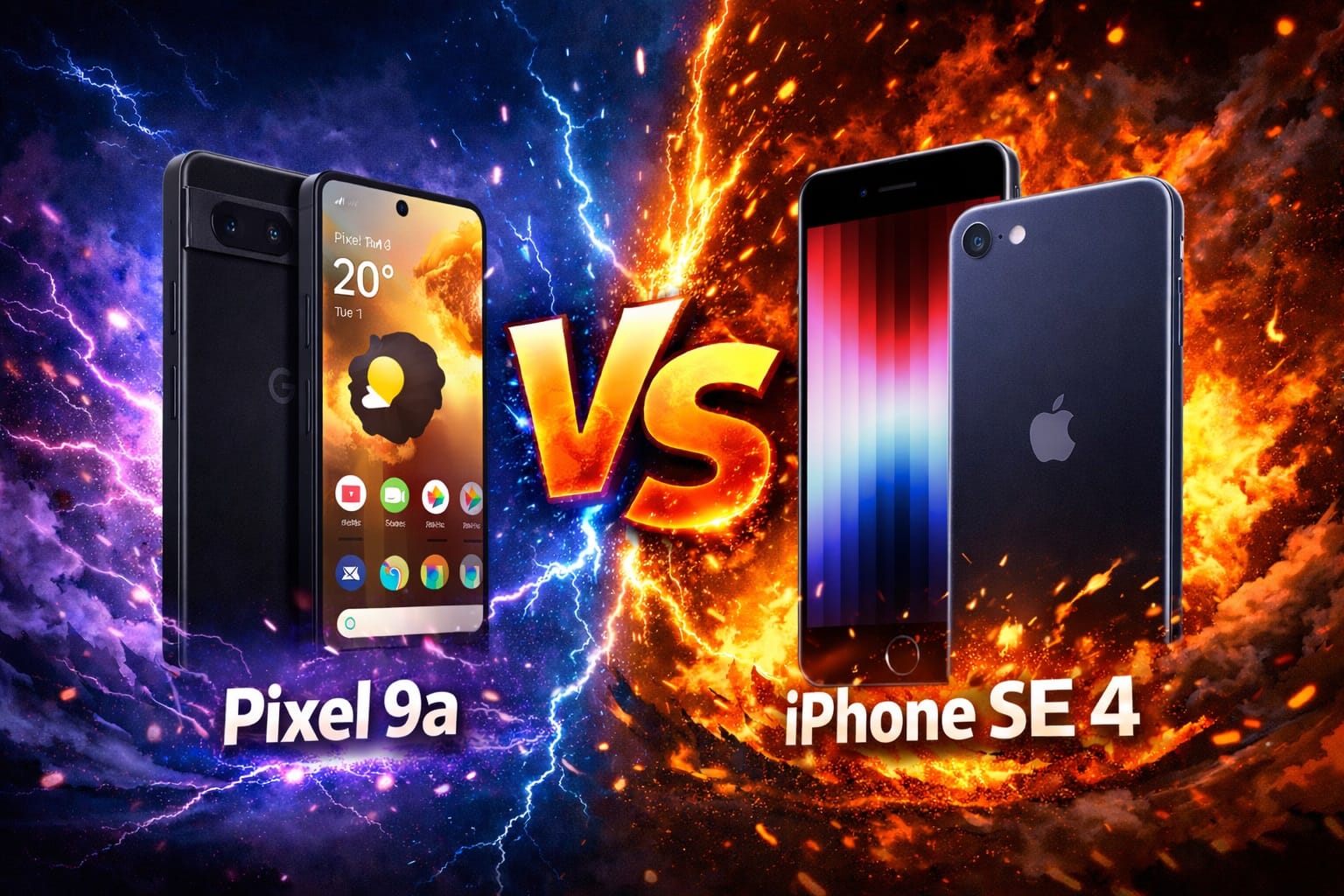
Pixel 9a vs iPhone SE 4: Specs, Speed & Savings
The Google Pixel 9a and the Apple iPhone SE 4 (often referred to as the iPhone 16e) have transformed the mid-range market for 2026. While Google leans into a modern design and AI-driven camera versatility, Apple offers a massive performance leap with its latest chipset and the official end of the home button era.
Specifications Comparison (2026)
|
Feature |
Google Pixel 9a |
iPhone SE 4 (iPhone 16e) |
|
Display |
6.3-inch OLED, 120Hz Refresh Rate |
6.1-inch Super Retina XDR OLED, 60Hz |
|
Processor |
Google Tensor G4 |
Apple A18 Bionic |
|
RAM |
8GB LPDDR5X |
8GB (Required for Apple Intelligence) |
|
Rear Camera |
48MP Main + 13MP Ultrawide |
48MP Single “Fusion” Camera |
|
Front Camera |
13MP Ultrawide |
12MP TrueDepth |
|
Battery |
5,100 mAh |
~3,279 – 3,582 mAh |
|
Charging |
23W Wired / 7.5W Wireless |
20W Wired / MagSafe Wireless |
|
Biometrics |
In-display Fingerprint & Face Unlock |
Face ID |
|
Software |
Android 15 (7 Years of Updates) |
iOS 18 (Apple Intelligence Support) |
In-Depth Analysis
1. Design & Display: Modern vs. Refined
The Pixel 9a features a modern 6.3-inch Actua display with a smooth 120Hz refresh rate, a rarity at its price point. Google has also ditched the iconic camera “visor” for a flatter, flush-mounted oval camera array.
The iPhone SE 4 marks a major design shift, finally adopting the 6.1-inch all-screen look of the iPhone 14/15, replacing the home button with Face ID and a notch. However, it remains limited to a 60Hz refresh rate.
2. Performance & Intelligence
The iPhone SE 4 uses the A18 Bionic chip found in the iPhone 16. This supports Apple Intelligence features like a redesigned Siri and AI writing tools. The Pixel 9a uses the Tensor G4. It focuses on “thinking like a human” through Google AI features such as Circle to Search, Call Screen, and Gemini Live.
3. Camera Capabilities
Google maintains an edge in versatility with its dual-camera setup (Wide + Ultrawide). It excels in low-light “Night Sight” photography and AI editing like “Best Take”. Apple uses a single 48MP sensor. It uses computational photography to provide 2x “optical-quality” zoom and superior video stabilization.
Pros & Cons
Google Pixel 9a
- Pros: Fluid 120Hz OLED screen; superior battery endurance (5,100 mAh); versatile ultrawide camera; 7 years of guaranteed updates.
- Cons: Tensor chip lags behind Apple in raw gaming power; slower charging speeds; plastic-feel back.
iPhone SE 4 (iPhone 16e)
- Pros: Flagship-level A18 performance; Apple Intelligence support; compact and premium build; Face ID security.
- Cons: Dated 60Hz display; single rear camera lacks ultrawide perspective; smaller battery than the Pixel.
Frequently Asked Questions (FAQs)
- Q: Does the iPhone SE 4 still have a Home Button?
- No, as of the 2025/2026 models, the iPhone SE line has transitioned to Face ID and gesture-based navigation.
- Q: Which phone lasts longer on a single charge?
- The Pixel 9a significantly outlasts the iPhone SE 4 due to its massive 5,100 mAh battery, compared to Apple’s smaller cell.
- Q: What is the price in 2026?
- The Pixel 9a starts at approx. $399. The iPhone SE 4 is priced around $499 to $599.
Our Verdict
- Choose the Pixel 9a for the best display and battery life for the price. Its 120Hz screen and dual-camera system make it the better choice for media consumption and photography.
- Choose the iPhone SE 4 for maximum longevity and speed. Its A18 chip ensures it will remain fast for years. It is the most affordable way to access the full Apple Intelligence ecosystem.
Price & Availability
- Google Pixel 9a (Click here to Check New Deals)
- Apple iPhone SE 4 (Expected Release: Leaks suggest March 2026 as the likely launch window)
- Note: Since the iPhone SE 4 is globally launching in March 2026, the link above will show the Apple iPhone SE 3 availability. Bookmark this page to get the direct purchase link as soon as it goes live!


Leave a Reply