
Google Pixel 10 Pro vs Xiaomi Redmi Note 13 Pro
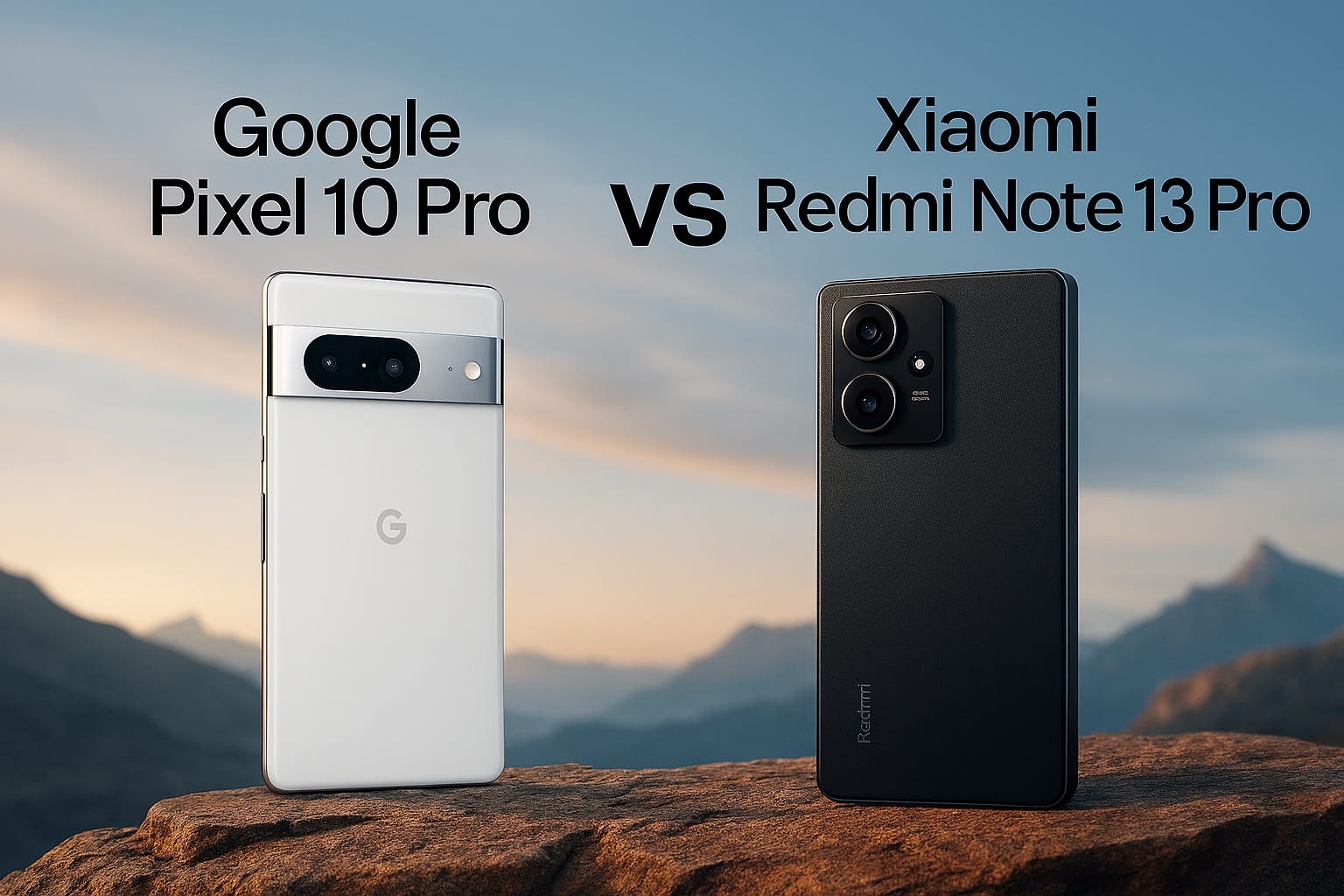
When comparing the Google Pixel 10 Pro and the Xiaomi Redmi Note 13 Pro, you aren’t just looking at two different phones; you’re looking at two different market philosophies. The Pixel 10 Pro, a premium 2025 flagship, promises industry-leading camera AI and a pure Android experience. The Redmi Note 13 Pro is a mid-range marvel, offering impressive hardware specs, especially a high-megapixel camera, at a fraction of the cost.
This comparison isn’t about which phone is “better” overall, but which one is better for you and your budget.
📊 Quick Comparison Chart: Pixel 10 Pro vs. Redmi Note 13 Pro
|
Feature |
Google Pixel 10 Pro |
Xiaomi Redmi Note 13 Pro |
|
Processor |
Next-Gen Google Tensor/Custom Chip (much faster CPU) |
Snapdragon 7s Gen 2 (Mid-range chipset) |
|
Rear Camera (Main) |
50 MP, 48 MP, 48 MP triple system with 5x optical zoom |
200 MP, 8 MP, 2 MP triple system (no optical zoom) |
|
RAM |
16GB |
Up to 16GB |
|
Battery |
Approx. 4870 mAh |
Approx. 5000 mAh |
|
IP Rating |
IP68 (superior water resistance) |
IP54 (splash resistant) |
|
Software |
Android 16 (pure, fast updates) |
Android 13/14 with MIUI overlay |
|
Special Features |
Wireless charging, superior AI features |
External memory card slot |
🆚 Performance: Flagship Muscle vs. Mid-Range Efficiency
The Google Pixel 10 Pro runs on Google’s own custom Tensor chip (or next-gen iteration), which is significantly faster and optimized for specific AI tasks and machine learning. This translates to smoother performance in demanding apps, faster photo processing, and an overall snappier user experience. The Redmi Note 13 Pro uses a capable but distinctly mid-range Snapdragon 7s Gen 2 processor, perfectly adequate for everyday tasks and casual gaming, but it cannot match the raw power of the Pixel.
📷 Camera: AI Wizardry vs. Megapixel Brute Force
This is the core difference. Xiaomi uses a massive 200MP sensor, which sounds impressive and captures highly detailed images in good light. However, the Pixel’s strength lies not just in its hardware (50MP main sensor with a dedicated 5x optical zoom telephoto lens), but in its unparalleled computational photography. Google’s software AI makes every photo look professional, often outperforming phones with higher megapixel counts in challenging lighting conditions. The Pixel also offers better video recording capabilities at 4K 60fps.
📱 Build Quality and Features
The Pixel 10 Pro offers premium build materials, a higher IP68 water resistance rating (meaning it can be submerged in water), and convenience features like wireless charging. The Redmi Note 13 Pro has a more standard IP54 splash resistance rating and lacks wireless charging, but it offers the practical benefit of an external memory card slot for expandable storage, which the Pixel lacks.
🏁 Our Verdict: A Clear Distinction
- The Google Pixel 10 Pro is for the discerning user who wants a top-tier flagship experience, the best point-and-shoot camera on the market, powerful AI features, premium build quality, and timely software updates directly from Google. It’s a significant investment in a high-end ecosystem.
- The Xiaomi Redmi Note 13 Pro is for the savvy consumer who needs a capable daily driver with a great screen, a versatile camera for general use, good battery life, and high-wattage fast charging, all while staying within a budget. It delivers excellent value for money.



Leave a Reply