
Battle of the Android Titans: OnePlus 13 Takes on the Google Pixel 9 Pro
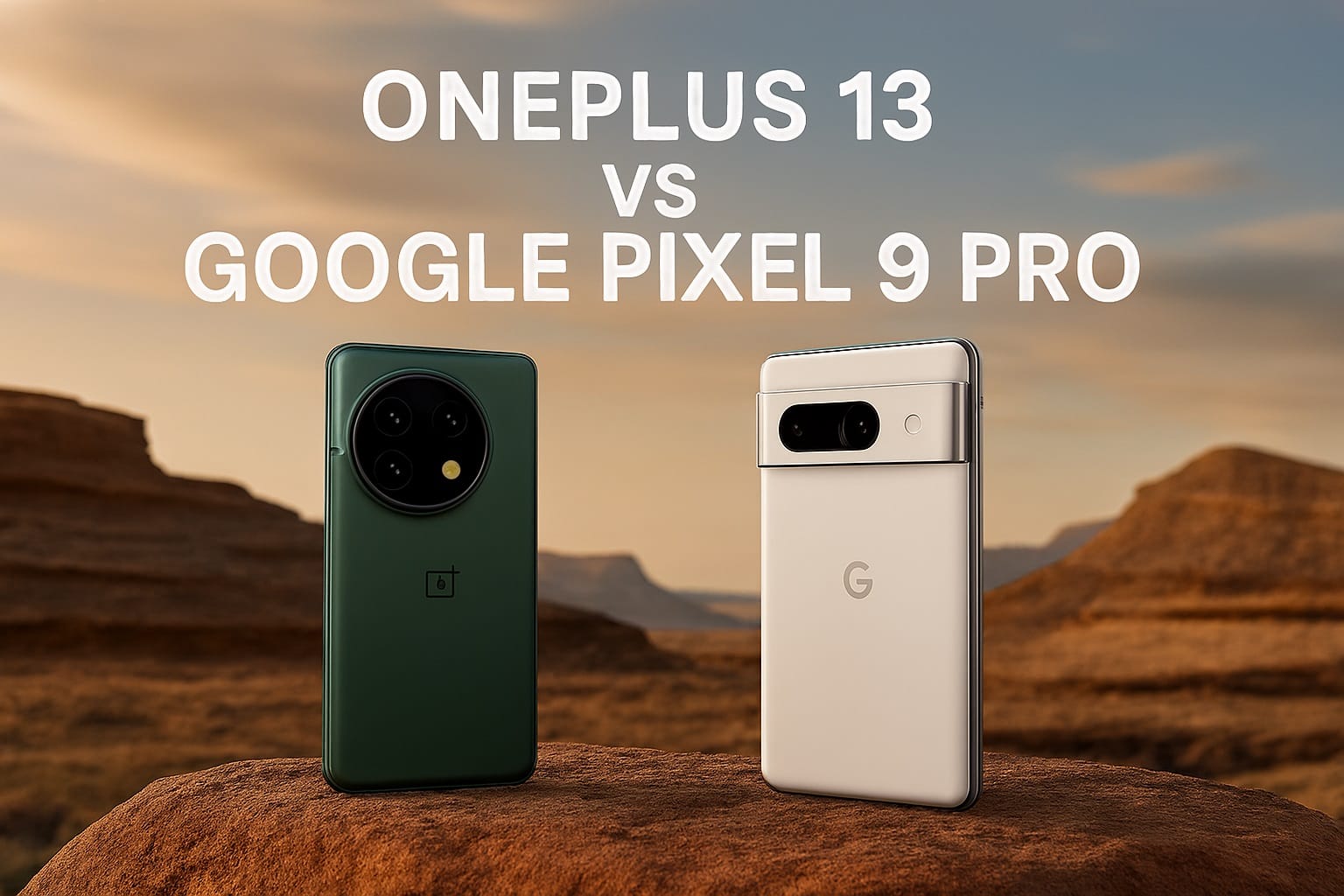
The 2025 smartphone arena pits raw hardware power against AI-driven smarts in a showdown between the highly anticipated OnePlus 13 and the Google Pixel 9 Pro.
OnePlus continues its pursuit of the ultimate all-rounder flagship, focusing on revolutionary battery life and cutting-edge silicon. Meanwhile, Google refines its “Pixel experience,” leaning heavily on computational photography and a pure, AI-enhanced version of Android.
This comparison breaks down which flagship delivers the best overall experience for your money.
📊 Quick Comparison Chart: OnePlus 13 vs. Google Pixel 9 Pro
|
Feature |
OnePlus 13 |
Google Pixel 9 Pro |
|
Processor |
Snapdragon 8 Elite Mobile Platform |
Next-Gen Google Tensor G4/G5 Chip |
|
Display |
6.82-inch QHD+ 120Hz LTPO AMOLED |
6.7-inch QHD+ 120Hz LTPO OLED |
|
Rear Cameras |
Hasselblad Triple 50MP system (incl. 3x Optical Periscope) |
Triple Camera system (incl. 5x Optical Periscope) |
|
Battery Capacity |
Massive 6,000mAh |
Approx. 5,050mAh |
|
Charging Speed |
100W Wired, 50W Wireless |
30W Wired (Approx.), 23W Wireless |
|
Software |
OxygenOS 15 (Android 15) |
Pure Android 15 with AI features |
|
Build Materials |
Aluminum frame, Glass back/front |
Premium Aluminum, IP68 rated |
|
Primary Focus |
Speed, battery life, raw specs |
AI, camera quality, user experience |
🔎 In-Depth Analysis
1. Performance: Raw Power vs. AI Optimization
The OnePlus 13 leverages the bleeding-edge Snapdragon 8 Elite Mobile Platform, promising top-tier CPU and GPU performance. This is the phone for hardcore gamers and power users who demand the absolute fastest processing speeds on the market.
The Google Pixel 9 Pro relies on its custom Google Tensor chip, which might not win raw speed tests against the Snapdragon, but is purpose-built for AI and machine learning tasks. This optimization powers Google’s “magic” features, from instant live translation to complex photo editing tools like Magic Editor.
2. Camera: Hasselblad Versatility vs. Google AI Magic
Both phones feature highly capable triple-camera systems with periscope telephoto lenses. The OnePlus 13 offers versatile hardware co-developed with Hasselblad, capturing detailed, color-accurate shots across all lenses.
However, the Google Pixel 9 Pro is generally considered the king of point-and-shoot photography. Google’s AI and software processing consistently produce stunning, balanced images with zero effort from the user. If computational photography is your priority, the Pixel remains unmatched.
3. Battery and Charging: The OnePlus Advantage
The OnePlus 13 pulls ahead with its industry-leading 6,000mAh battery capacity, utilizing efficient silicon-carbon technology. This provides unprecedented battery endurance, easily lasting two days for most users. Furthermore, its 100W wired charging blows the Pixel’s relatively modest charging speeds out of the water. The Pixel offers a respectable battery life for a single day, but cannot match the sheer longevity and rapid top-ups of the OnePlus 13.
4. Software Experience
The Pixel 9 Pro offers the purest vision of Android, with no bloatware and guaranteed instant software updates for many years. The experience is clean, simple, and intuitive.
The OnePlus 13 runs OxygenOS, which has matured into a fast, feature-rich skin over Android 15. It offers more customization options and performance tweaks, though it is a slightly less “pure” Android experience than the Pixel.
Our Verdict: Which Flagship Is For You?
- Go for the OnePlus 13 if: You prioritize maximum battery life, ultra-fast charging, top-tier gaming performance, and versatility in hardware specs. It’s the ultimate all-rounder.
- Go for the Google Pixel 9 Pro if: The camera experience and AI features are your single most important consideration. You value a clean Android experience, guaranteed fast updates, and smart features that genuinely simplify your digital life.
Leave a Reply